
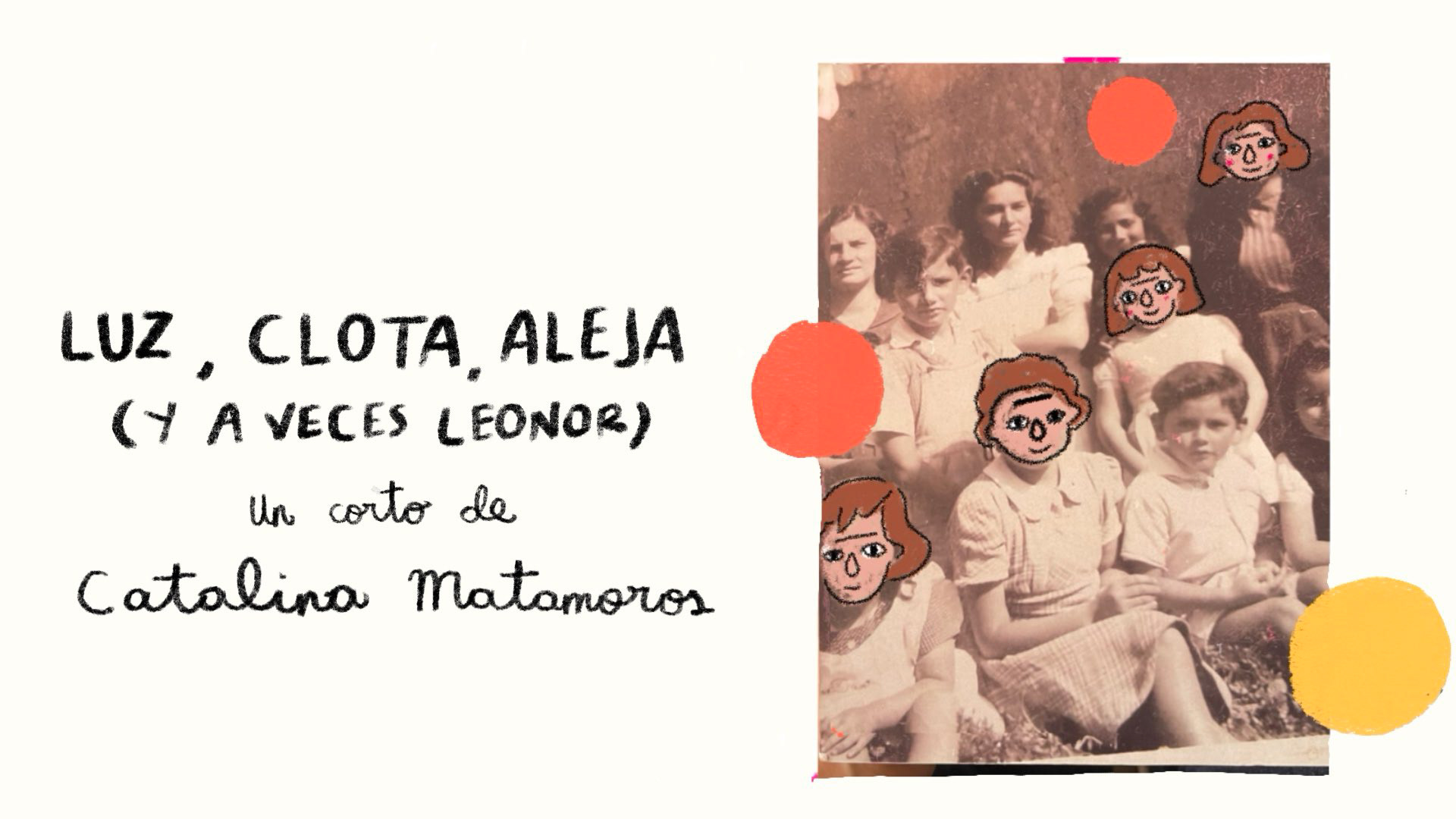
LUZ, CLOTA, ALEJA AND SOMETIMES LEONOR
ARGUMENT:
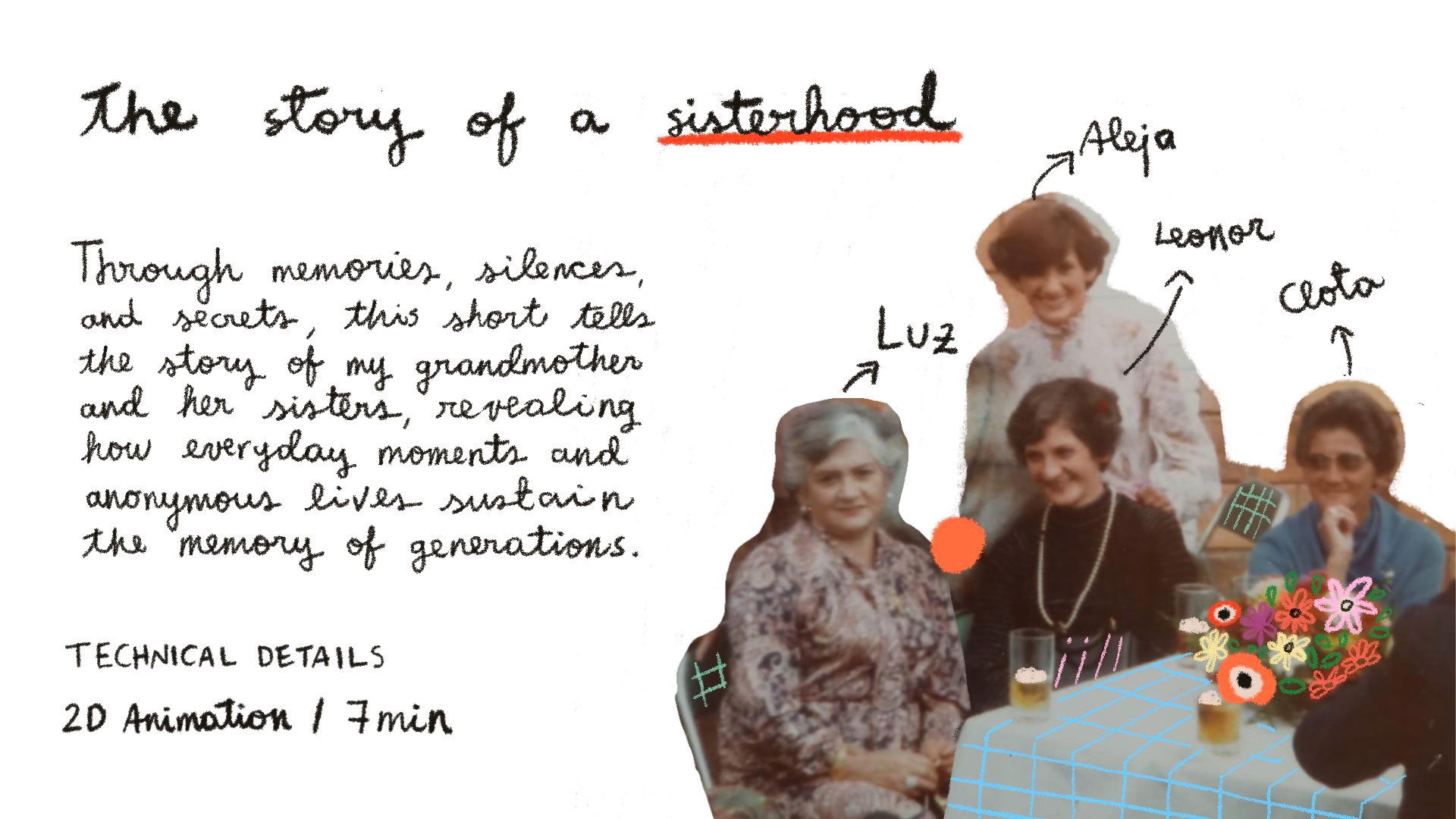
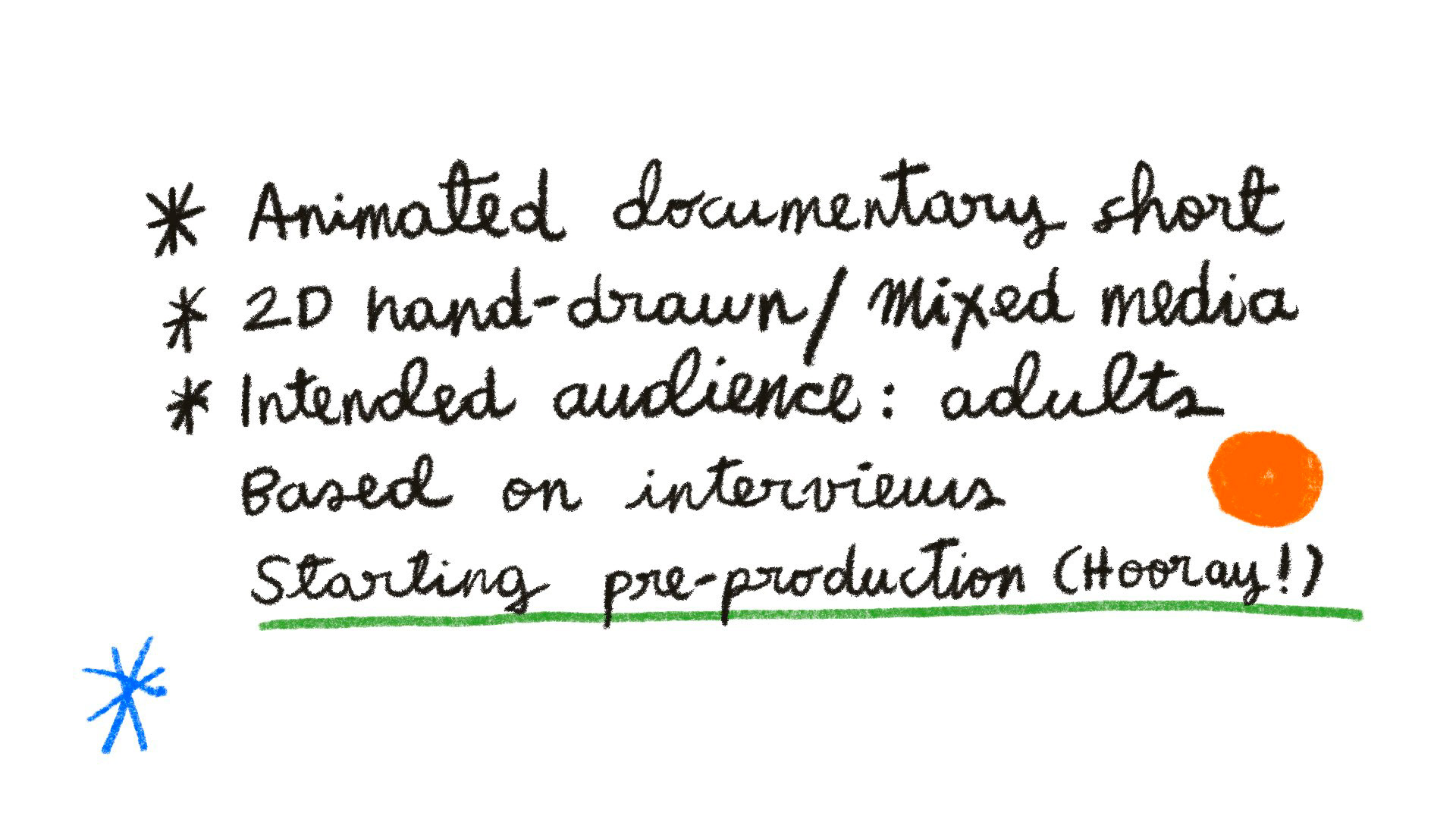
Luz, Clota, Aleja, and sometimes Leonor is an animated
documentary that tells the life story of my grandmother and her
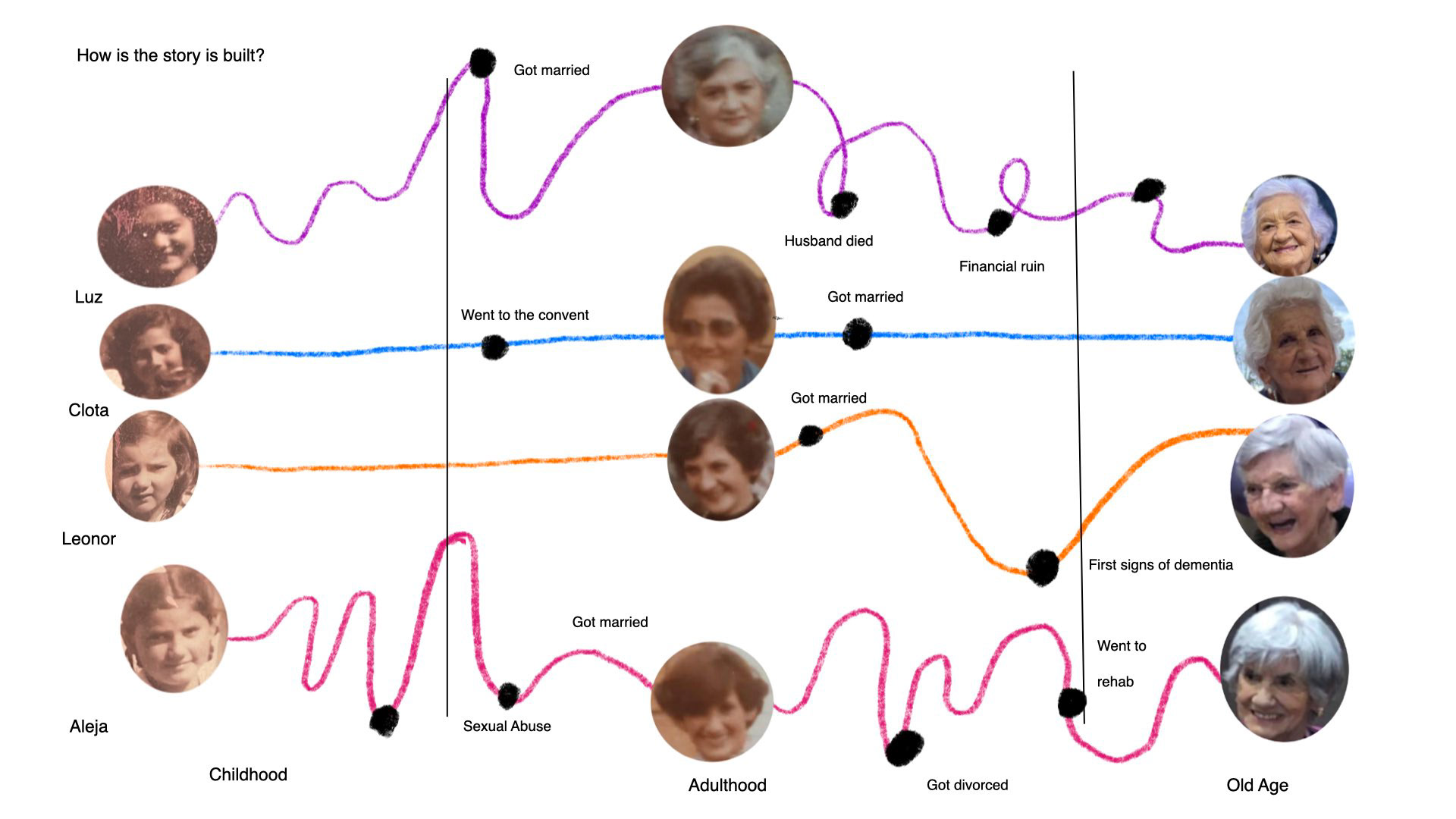
sisters. The narrative is divided into three stages: childhood, youth
and adulthood, and old age, reconstructing their memories and
reflections on what it means to live.
The documentary is built from the voices of the protagonists
themselves, who narrate their stories in the first person. Visually,
the film uses 2D animation, experimenting with textures and visual
techniques to represent the fragility of memory and the metaphor
of life as a constantly reconstructed memory.
During their childhood, the sisters grew up together in a rural
environment in the 1930s and 1940s, within a large family marked
by a strict and authoritarian father. Their memories reveal the first
differences among them: Luz, the eldest, was her father’s favorite;
Clota, more submissive and observant, considers her childhood
her most cherished memory; Aleja, rebellious and strong-willed;
and Leonor, who retains few memories to share. This stage also
highlights the limited educational opportunities for women and how
early decisions began shaping their futures.
The story moves into youth and adulthood, when the sisters’
paths start to diverge. In intimate conversations, they recall their
marriages: Luz with José Domingo, Clota with Polo, Leonor
withFernando, and Aleja with a controlling man.
These stories reveal how partner choices profoundly shaped their
lives; yet, more than a free decision, marriage appears as an almost
inevitable step within the few options available to women of their
generation.
As time passes, adversities arise. José Domingo’s death triggers an
economic crisis that changes Luz’s family’s trajectory and exposes
women’s financial dependence on their husbands. Aleja recounts
the sexual abuse she suffered at school and how no one believed
her, revealing the loneliness and misunderstanding that marked
her life. Leonor speaks of an accident that affected her memory,
highlighting the fragility of recollection and the risk of stories
disappearing if left untold. Each sister confronts these experiences
differently, showing their personalities and resilience.
Finally, in old age, the sisters look back and reflect on what
it means to live. Luz, despite the hardships and losses she
experienced, feels she has had a good life. Clota expresses her
concern for those who will remain when she is no longer there,
reflecting her selfless character. Aleja shares her regrets and her
desire to ask forgiveness from those she may have treated unfairly.
The documentary closes with a serene look at a life lived, marked by
learning, loss, and love. Through these lives, we glimpse the social
pressures that shaped a generation of women, the expectation to
marry, the sacrifice of education, the silence surrounding abuse, and
adaptation as a form of survival. At the same time, we witness the
bond between sisters, their humor, their rebellious spirit, and their
ability to keep moving forward.
DIRECTOR'S STATEMENT
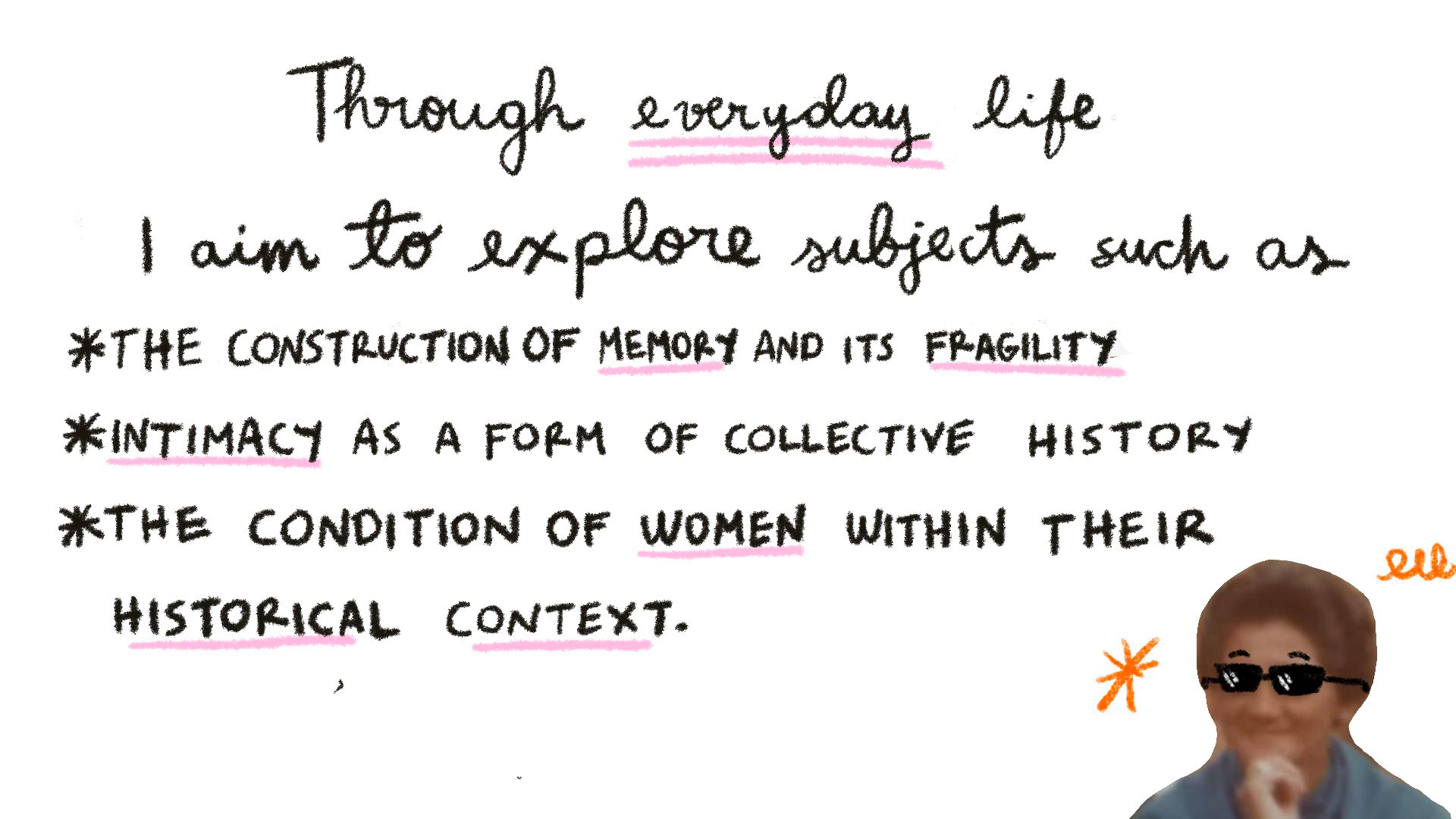
Not all of us are heroes, but through our stories we transcend in some way. My grandmother and her sisters have had a profound impact on my life, and by listening to them speak about their past, I also find parts of myself reflected in their experiences. What I want to show is the simplicity and fragility of life. Life is temporary and made up of highs and lows; there are no perfect lives, despite the images of success we often see around us. Life simply happens, and each person decides how to navigate it. At the same time, there are events beyond our control, situations we do not wish for but must still endure. This documentary is an attempt to acknowledge that reality and to find meaning in the everyday lives that, quietly, shape who we are. Through animation, I want to construct an intimate portrait of four sisters through memory, where the everyday becomes a universal reflection on life. More than reconstructing events chronologically, the film seeks to convey the sensation of remembering: fragments that appear, transform, and blend with emotions, silences, and small family stories. Animation allows us to depict this unstable territory of memory, using fluid transitions and moments of morphing, connecting scenes as if they were memories shifting and changing shape.
Color serves as a key narrative element that distinguishes each
sister: Clota and Luz are associated with blues and purples, evoking
their calm and reflective nature; Aleja appears in intense magentas
and oranges, reflecting her energy and rebellious spirit; and Leonor
moves between yellows and greens, evoking childhood, vitality, and
at the same time, the fragility of memory. The sisters’ voices guide
the narrative, edited as if they are conversing with one another,
creating an intimate space where memories unfold gradually.
The intention is for the audience to recognize, in these seemingly
ordinary lives, something deeply universal: that every life is made
of decisions, losses, affections, and memories that transform over
time.
ANIMATION TESTS